Care Is the Craft
By Bobby George ·
I poured a glass of wine into a martini glass.
It was one of those nights.
The wine was fine. I tasted it to be sure. But my fingers grasped and my lips were disoriented. Nothing felt quite right, not even the warmth of the Chianti in my mouth. My hands never found a way to rest. Even the pour sounded different.
You may never notice the “right” glass. You will always notice the “wrong” one.
Martin Heidegger found this lesson in a hammer. While it works, it withdraws. You see the nail, the board, the house taking shape. Only when the hammer breaks does it appear again.
Our culture tends to think of design as something additive.
A finish. A flourish. Polish at the end of a project.
Our language gives us away. “The house is done. It only needs a coat of paint.” “Send it to design to pretty it up.” “Can you make it pop?” “We’ll do a touch-up at the end.” “It’s a hammer. Just put a rubber grip on it.”
We speak as if the thing already exists, and design is what we do to it afterward.
The designer Paul Rand told his students otherwise.
“The design is the product of your thinking.” Before that thinking finds its focus, he said, “you are searching. You are feeling. You are looking for things. You do not know what you are doing. You are lost. You are in a maze.”
The outcome is the design. Every thought, every decision, arrives here.
You can optimize the process and strive for clarity, but there is rarely a ready-made solution. It is hard for those accustomed to finding answers to learn how to stand in questions. That we can make something new at all is remarkable. The work is staying with it long enough to understand the life it will enter.
Design often begins by taking something away.
Most of what a woodworker makes ends up on the floor. Shavings under the bench. Offcuts against the wall. The chair is what remains when everything else has been removed. Its form is found in seating you.
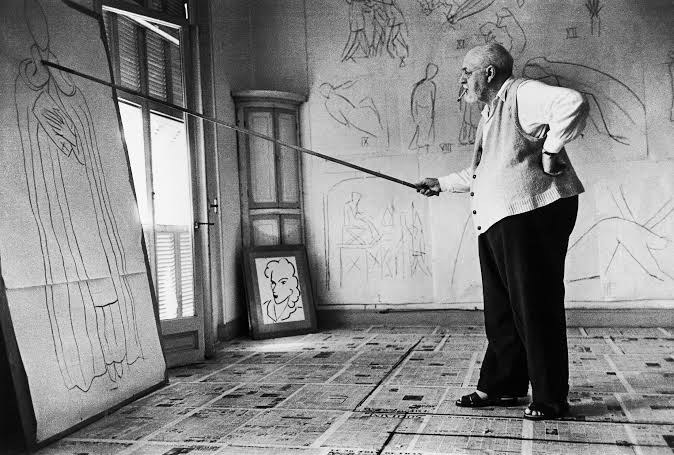
The artist Henri Matisse knew this too. Late in life, too ill to paint, he picked up scissors in his home above the sea at Nice. He called it drawing with scissors, cutting directly into color with the immediacy of a sculptor carving into stone.
One summer, finding the heat at a pool in Cannes unbearable, he came home and made his own. Blue swimmers cut from paper began circling the walls of his dining room. That pool now belongs to the Museum of Modern Art.
The cut-outs are among the most joyful things he made, an interplay between the concrete and the abstract.
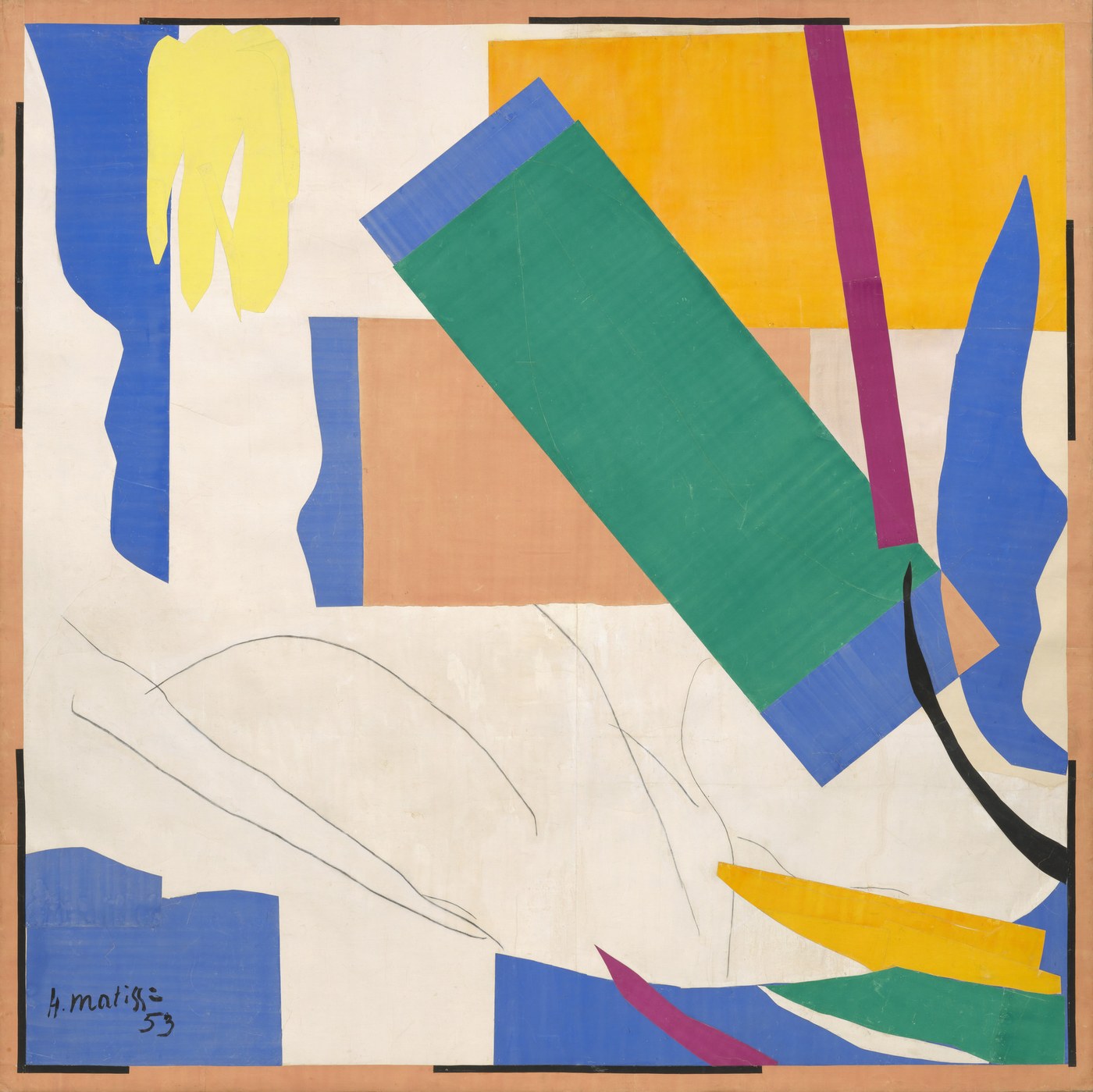
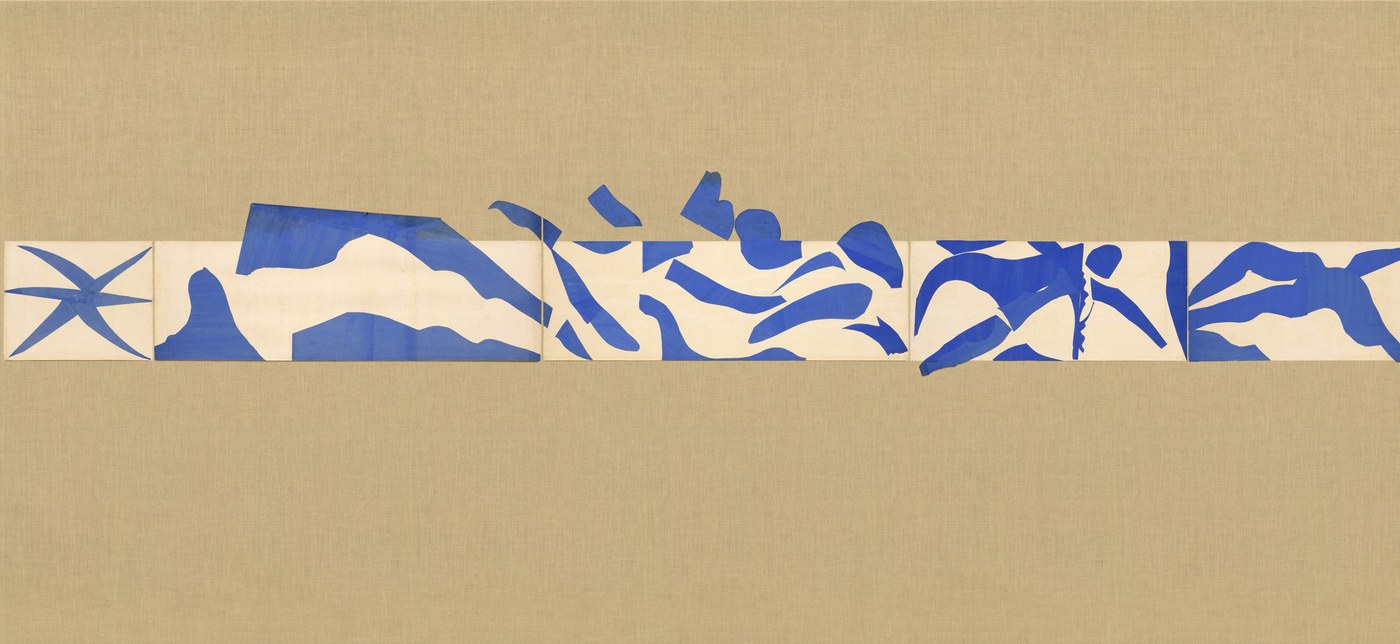
A collage may be the perfect image of thought. At first glance, it seems to be an act of addition, one piece laid upon another. In fact, it is a series of intentional cuts. The work we see is what those cuts leave behind.
Every cut is a decision about what the work can live without.
What remains carries the care.
That care is also a form of welcome.
Designers are hosts. Long before you arrive, they have prepared the space. They have thought through the appetizers and dessert, lit the candles, set the chairs so conversation can cross the table, chosen music quiet enough to sit beneath the din of the meal, and arranged the night.
Then they greet you at the door, take your coat, and offer you a glass of champagne.
Yoshio Taniguchi, the architect who reimagined the Museum of Modern Art, where Matisse’s pool now lives, hoped people would “enjoy the tea, not the teacup.”
It is one of my favorite lines. I cite it often and think about it even more.
It reminds me of Rikyū, the tea master who planted a hedge above Japan’s Seto Inland Sea. The hedge concealed the view. Guests arrived expecting a breathtaking vista and saw nothing of the water.
Then they knelt at a stone basin to wash their hands.
Only from that position, bent low, did the sea appear through a small opening in the leaves.
What a sight that must have been.
The hedge prepared the encounter. Rikyū shaped the experience so his guests could see what had always been there.
Care makes room for attention.
Making that room begins with listening.
To listen is to enter a new space. A space of attention and collaboration. A place we tend to as it tends to us. We listen to the materials and follow where they lead. We listen to the community. We listen to the ineffable and fleeting.
To the flicker of what something wants to become.
Designers search for the expression that can give form to what they hear and to what people cannot quite say. They listen for what an abstract idea could become in your hands, in your ears, before your eyes. How you will live with it. What stories you will tell.
It could be as simple as a spoon.
You imagine a stranger’s hands. Their morning. The weight of the spoon as they stir their tea. You make something for someone you may never meet, and it reaches them anyway, whether they know it or not.
There is joy in that. Even delight. And beneath both, humility.
The work of a designer is to listen. To make an idea speak to you. With you. For you. In that order.
Designing by listening is building with a community.
Listening has a rhythm.
Alfred North Whitehead, the English philosopher and mathematician, called it the rhythm of education. He gave it three movements: romance, precision, and generalization.
My friends tire of hearing me say this, and yet it is the closest thing to a compass I have found.
Design keeps the same time.
- Romance is the listening, the tending, the first wonder at what something could become. Inklings taking flight. The adventure of ideas.
- Precision is the patient work of testing and refining, of allowing research and experience to shape the work.
- Generalization is the bringing of it into the world and the willingness to take the response to heart.
Then the rhythm begins again.
You have to learn to see anew. To cultivate patience, respect, and the willingness to change your position. Some things come into view only then.
Care has its own geometry.
The distance from hand to handle. The angle of a chair back. The space between one line and the next. Each is a small measurement. Each is a decision about a person.
Craft is love, expressed in proportion.
A professor once told me that every winter, while taking his exit off the interstate, he could tell someone had only looked at the blueprints. No one had imagined the turn. There was an approval, but no discerning eye.
Even absence leaves a trace.
You can feel where no one thought.
Intention leaves a trace too. Every scenario considered. Every decision tested, questioned, and changed when someone said it did not work. The ease you feel is what remains of all that listening.
New tools arrive every day now. Every maker faces the same question: which ones to pick up, and when.
Speed makes it easier to add. It makes it no easier to know what to take away.
Let speed shorten the distance between making and listening. Build the prototype in an hour, then spend the day with the people it is for. Shorter loops. Stronger loops.
Let the speed serve the listening.
That night, the wine was fine. The glass was wrong. I noticed it because it failed to disappear. My fingers grasped. My lips searched. My hands never found their rest.
When something has been made with care, it can withdraw. The hand knows where to settle. The lips know where to go. The person is free to enjoy the wine.
People live with what we make.
They hold it in their hands. They bring it to their lips. Most of the time, if we have cared enough, they never have to think about it.